From Square Footage to Square Miles: How American Real Estate Investors Are Building GCC Property Empires Through UAE Golden Visa Status
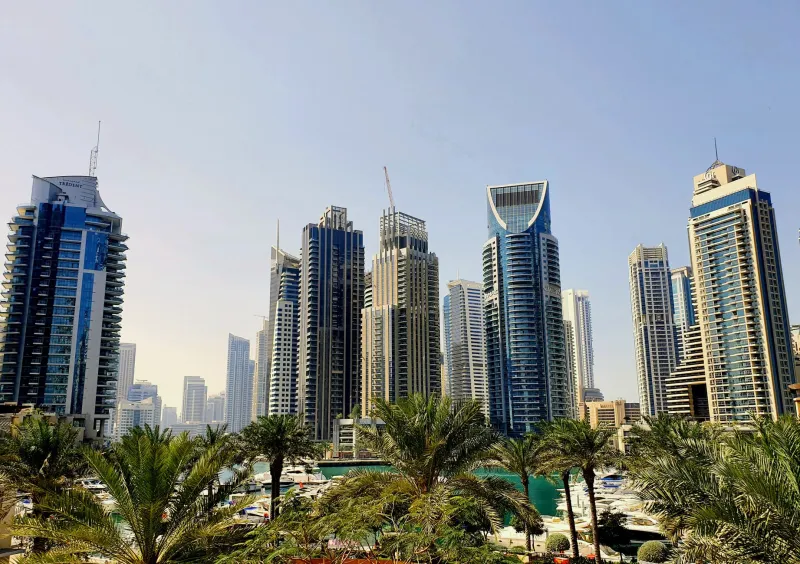
For decades, American real estate professionals have scoured domestic markets — from Sun Belt suburban corridors to Manhattan's commercial towers — in search of yield, appreciation, and portfolio diversification. Today, a discerning segment of that community is looking considerably further east. UAE Golden Visa residency has emerged as the structural foundation upon which some of the most ambitious American property investors are constructing portfolios that span Dubai, Abu Dhabi, Riyadh, and beyond.
The appeal is not simply geographic novelty. It is architectural: the Golden Visa transforms an American investor from a foreign spectator into a recognized regional resident, unlocking financing structures, regulatory pathways, and professional networks that simply do not exist for those operating at arm's length.
Why Residency Changes Everything in the GCC Property Market
American investors who have attempted to acquire UAE real estate without residency often describe the experience as operating with one hand tied behind their back. Mortgage access is limited, banking relationships are transactional rather than strategic, and the informal deal flow that defines premium real estate — early access to off-plan launches, introductions to institutional sellers, co-investment opportunities with regional family offices — flows almost exclusively through established local relationships.
Golden Visa status fundamentally alters that dynamic. As a long-term UAE resident, an American investor can open multi-currency accounts with Tier 1 regional banks, qualify for mortgage financing at competitive rates on UAE properties, and register a local company through which acquisitions can be structured with greater tax efficiency. Perhaps more importantly, residency signals permanence to local counterparts — a quality that Gulf business culture weighs heavily when evaluating partnership and co-investment proposals.
For investors operating in the commercial segment, residency also simplifies the process of obtaining the trade licenses and regulatory registrations required to participate in certain asset classes, including hospitality, logistics warehousing, and mixed-use development — sectors that are generating some of the region's most compelling risk-adjusted returns.
The GCC as a Portfolio Diversification Engine
The Gulf Cooperation Council — comprising the UAE, Saudi Arabia, Qatar, Bahrain, Kuwait, and Oman — represents a combined real estate market that analysts at JLL and Knight Frank have repeatedly identified as structurally undersupplied relative to its demographic and economic trajectory. Saudi Arabia alone is executing a pipeline of giga-projects that will require an estimated $1.25 trillion in real estate and infrastructure investment over the coming decade. Qatar continues to develop its post-World Cup commercial real estate legacy. Oman is quietly attracting resort and second-home buyers from across the region.
For an American investor already established in Dubai, accessing these adjacent markets becomes a question of relationships and logistics rather than regulatory navigation. UAE-based advisors, legal firms, and investment banks maintain active desks across the GCC, and Golden Visa holders report that their UAE residency status lends meaningful credibility when approaching developers and government-affiliated investment entities in neighboring countries.
Diversification across GCC markets also provides a natural hedge. When Dubai's residential sector experiences a pricing plateau — as it did between 2014 and 2020 — commercial assets in Abu Dhabi or hospitality properties in Oman may be entering a different phase of their cycle. Experienced investors treat the GCC less as a single market and more as a collection of distinct real estate economies that can be weighted according to prevailing conditions.
Case Studies: American Investors Who Scaled Dramatically After Establishing UAE Residency
The Phoenix Developer Who Found His Second Act in Dubai
A Phoenix-based residential developer with a portfolio concentrated in Arizona multifamily assets secured his UAE Golden Visa in 2021 through a qualifying property investment in Dubai Marina. Within 18 months, he had leveraged his new residency to establish a UAE-registered development company, partnered with a local family office on a mid-market residential project in Dubai South, and acquired two commercial units in Abu Dhabi's emerging Reem Island district. By his own accounting, his investable real estate assets under management grew by over 300 percent during that period — not because the UAE market is without risk, but because his residency status granted him access to deal structures and financing that compressed the timeline for scaling.
The Chicago Commercial Broker Turned Regional Operator
A veteran commercial broker from Chicago's institutional leasing market relocated to Dubai on a Golden Visa after identifying a gap in the market for professionally managed mid-size office assets catering to multinational tenants. Operating through a UAE-registered entity, she assembled a portfolio of Grade B commercial units across Business Bay and JLT, repositioned them with institutional-quality fit-outs, and leased them to regional subsidiaries of Fortune 500 companies. Her ability to open UAE corporate bank accounts, sign long-term lease agreements as a local entity, and engage directly with Dubai's Real Estate Regulatory Agency (RERA) was entirely contingent on her residency status — none of it would have been feasible as a foreign investor operating remotely.
Navigating the Regulatory Differences Between US and UAE Property Markets
American investors accustomed to the heavily documented, attorney-driven nature of US real estate transactions often find the UAE market refreshingly streamlined — and occasionally disorienting in its speed. Transactions that would require weeks of due diligence and title insurance processes in the United States can close in the UAE within days, particularly for off-plan purchases where the developer holds escrow obligations regulated by RERA.
Several key distinctions merit careful attention:
Title and Ownership Structure: Freehold ownership for foreign nationals is permitted only in designated zones, though these zones encompass the vast majority of Dubai's premium residential and commercial districts. A local legal advisor is essential for confirming freehold eligibility before any acquisition.
Financing: UAE mortgage products for non-UAE nationals typically require a minimum 20–25 percent down payment on residential properties. Golden Visa holders often negotiate more favorable terms given their residency status and the banking relationships that residency facilitates.
Taxation: The UAE imposes no capital gains tax, no income tax on rental receipts, and no inheritance tax on property assets — a stark contrast to the US tax environment. American investors should note, however, that US citizens remain subject to IRS reporting obligations on foreign income and assets regardless of residency, making coordination with a qualified cross-border tax advisor non-negotiable.
Off-Plan Risk Management: The UAE off-plan market offers attractive pricing but requires disciplined due diligence on developer track records and escrow compliance. RERA's public registry provides escrow account verification, and experienced investors treat this step as mandatory before committing capital.
Timing, Market Cycles, and the Long-Term Thesis
Dubai's residential market entered a pronounced upswing in 2021 that has continued to demonstrate resilience through 2024, driven by sustained inward migration, limited supply in premium segments, and the city's growing status as a global wealth hub. Commercial real estate — particularly Grade A office space — has experienced historically low vacancy rates as multinational firms establish regional headquarters.
Sophisticated American investors are not simply chasing this cycle. They are positioning for the structural thesis: a city and region that is deliberately engineering itself as a permanent node of global commerce, finance, and lifestyle — not a speculative boom market, but a long-duration growth story with a government balance sheet and policy apparatus explicitly committed to sustaining it.
The Golden Visa is, in this context, not merely a residency document. It is the instrument through which American real estate professionals convert that thesis from an observation into an operating position — with all the access, credibility, and structural advantage that residency in one of the world's most dynamic property markets confers.
For those who have built their careers on identifying inflection points before the broader market recognizes them, the question is not whether the UAE deserves a place in a serious real estate portfolio. The question is how much longer they can afford to watch from the outside.