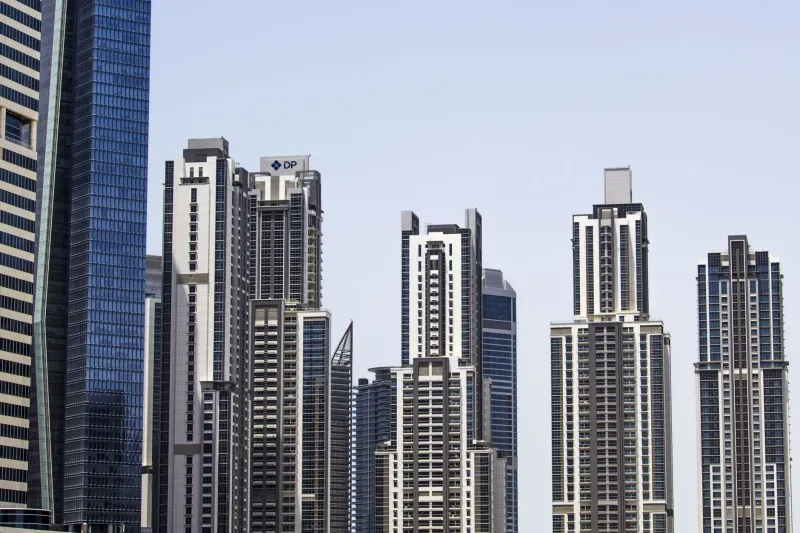
The UAE Residency Edge: How American Entrepreneurs Are Closing Bigger Deals by Planting Their Flag in Dubai

In international business, perception shapes leverage. The moment a counterpart across the table understands not just who you are, but where you operate from, the dynamics of a negotiation can shift in ways that no pitch deck fully captures. For a rising cohort of American entrepreneurs, establishing UAE Golden Visa residency has become a deliberate strategic move — one designed not merely for tax efficiency or lifestyle flexibility, but to project a particular kind of global gravitas that opens doors and strengthens deal terms.
Dubai is not simply a city. It is a signal. And for those who know how to use it, that signal carries considerable weight.
Why Business Address Still Matters in a Borderless Economy
The popular narrative suggests that modern commerce has rendered geography irrelevant. In practice, the opposite is frequently true. Where you are headquartered — or where you are perceived to operate from — continues to carry enormous symbolic and practical weight in cross-border transactions.
The UAE occupies a uniquely powerful position in this regard. As a jurisdiction, it sits at the intersection of three major economic blocs: the Gulf Cooperation Council, South and Southeast Asia, and the broader African continent. It maintains diplomatic and trade relationships that neither the United States nor the European Union can fully replicate in certain regions. For American entrepreneurs seeking to expand into markets across the Middle East, Africa, or Central Asia, a UAE residency credential is not merely cosmetic — it signals genuine regional commitment and institutional familiarity.
Institutional investors, sovereign wealth funds, and family offices operating out of the Gulf region have long preferred counterparts who demonstrate a physical stake in the region. A Golden Visa holder who maintains an address in Dubai, participates in local business culture, and understands the regulatory environment of the UAE is a fundamentally different conversation partner than an American executive who flies in for a three-day road show and flies out again.
The Credibility Premium: What Residency Communicates to Counterparts
Consider the psychology of a high-stakes negotiation. Every party at the table is quietly assessing risk — evaluating not just the merits of a deal, but the reliability, permanence, and seriousness of the person proposing it. An entrepreneur who has formalized their presence in the UAE through Golden Visa residency communicates several things simultaneously: they have met the financial thresholds required for qualification, they have undergone due diligence at a governmental level, and they have made a long-term commitment to operating in one of the world's most commercially dynamic environments.
That combination functions as a credibility premium. It is, in effect, a form of third-party vetting that precedes the conversation.
American founders in the technology, real estate, and consumer goods sectors have reported that simply disclosing their UAE residency status during introductory meetings with potential partners in Asia and the Gulf has materially altered the tone of those discussions. The implicit message — that this is not a speculative tourist investor but a serious operator with established roots — can compress due diligence timelines, reduce the perceived counterparty risk, and open access to deal flows that would otherwise require years of relationship-building to reach.
Practical Leverage in Supplier and Capital Negotiations
Beyond perception, there are concrete structural advantages to conducting business from a UAE base that translate directly into negotiating leverage.
For entrepreneurs sourcing goods or services from manufacturers in Asia, the Middle East, or Africa, the UAE's position as a major logistics and re-export hub is practically significant. Suppliers who regularly work with UAE-based buyers are accustomed to the commercial norms, payment structures, and contractual frameworks common in the region. An American entrepreneur operating through a UAE entity — supported by Golden Visa residency — can often negotiate procurement terms that are more favorable than those available to a purely US-based buyer, particularly when working with suppliers for whom the American market represents a distant or complex relationship.
On the capital side, the picture is similarly compelling. The UAE is home to some of the world's most active sovereign wealth funds, family office networks, and institutional investors who are actively seeking co-investment opportunities in international ventures. American entrepreneurs who have established UAE residency and, in many cases, a local corporate structure, are positioned to participate in those conversations in a way that offshore applicants simply cannot replicate. The ability to meet investors on their own turf — to attend deal forums in Abu Dhabi, relationship dinners in DIFC, or private briefings at Emirates Towers — is not a minor logistical detail. It is, for many, the difference between being considered and being overlooked.
Case in Point: Anchoring a Capital Raise in the Gulf
One instructive pattern that has emerged among American mid-market entrepreneurs involves using UAE Golden Visa residency as the anchor point for a regional capital raise. Rather than approaching Gulf-based investors through intermediaries or during brief visit windows, these founders have structured their fundraising processes around their local presence — hosting investor meetings at co-working spaces within DIFC, leveraging introductions through UAE-based professional networks, and demonstrating operational continuity by maintaining a genuine, documented presence in the market.
The results, in several documented cases, have been materially different from prior attempts to raise capital from the same investor pool through traditional channels. Investors who had previously expressed polite interest but declined to commit became active participants once they understood that the entrepreneur in question was not a transient visitor but a fellow resident of the ecosystem — someone subject to the same regulatory environment, operating within the same time zones, and reachable for the ongoing dialogue that serious investment relationships require.
Building the Infrastructure of Influence
For American entrepreneurs considering this path, it is worth understanding that the deal-making advantages of UAE Golden Visa residency compound over time. The initial credibility premium is meaningful, but the deeper value emerges through the accumulation of relationships, local market knowledge, and reputational capital that sustained presence in Dubai generates.
This is not a passive asset. Entrepreneurs who derive the greatest negotiating advantage from their UAE residency are those who invest in the ecosystem — who participate in industry events, cultivate relationships with local advisors and government-linked entities, and develop genuine fluency in the commercial culture of the region. The Golden Visa provides the foundation. What is built upon it depends on the intentionality of the holder.
For American business owners who operate at the intersection of ambition and global scale, the question is no longer whether a UAE presence is worth pursuing. The more pressing question is how much longer they can afford to negotiate without it.