The Inner Circle: A Strategic Guide to Building Elite Networks in Dubai as an American Golden Visa Holder
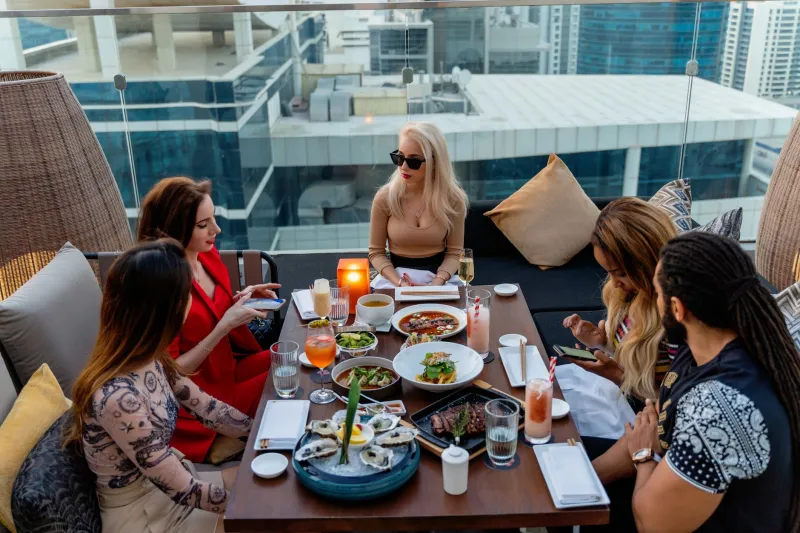
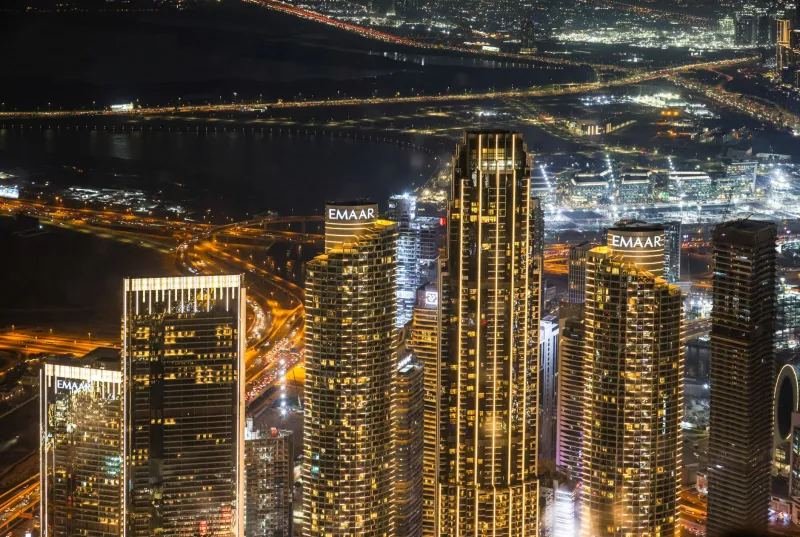
Dubai is one of the most networked cities on earth. Approximately 90 percent of its population is composed of expatriates from over 200 nationalities, which means that the social infrastructure for meeting new people is, on the surface, remarkably accessible. There are industry events every week, business councils representing dozens of countries, and a hospitality sector designed to facilitate introductions at every price point. For newly arrived American Golden Visa holders, this apparent openness can be misleading.
The deals that matter—the co-investments, the fund introductions, the government partnership opportunities—do not originate in hotel ballrooms. They emerge from relationships built over months in environments that require either invitation, institutional membership, or the social vouching of someone already inside. Understanding the architecture of Dubai's elite network is not a soft skill. For American entrepreneurs who have relocated with serious capital and serious ambitions, it is a strategic imperative.
Reframing the American Networking Instinct
American entrepreneurs arrive in Dubai with a networking instinct shaped by a particular cultural context: the pitch, the elevator introduction, the rapid exchange of credentials, and the implicit understanding that business relationships can be built quickly and transactionally. In certain Dubai environments—particularly the startup and technology sectors centered around Dubai Internet City and Area 2071—that approach translates reasonably well. In the city's more established wealth circles, it does not.
The foundational principle of Dubai's elite social ecosystem is relationship primacy. Business is conducted between people who trust one another, and trust is built through sustained presence, reciprocal hospitality, and demonstrated cultural literacy—not through a well-crafted LinkedIn message or a compelling pitch deck delivered at a first meeting. American entrepreneurs who internalize this principle early tend to build networks that compound rapidly. Those who do not often spend their first year in Dubai feeling perpetually adjacent to the rooms where decisions are made.
This is not a criticism of American business culture—it is an observation about cultural adaptation. The founders who thrive in Dubai's network are typically those who arrive with patience, genuine curiosity about the region, and a willingness to invest time in relationships before expecting a return.
The Institutional Anchors: Where Serious Networks Begin
Several institutions function as primary anchors for Dubai's high-net-worth business community, and membership or affiliation with them is among the fastest legitimate pathways to network integration for American Golden Visa holders.
The Dubai International Financial Centre (DIFC) Community. The DIFC is not merely a regulatory jurisdiction—it is a social ecosystem. The DIFC Club, the district's private members' facility, serves as an informal meeting ground for the fund managers, family office principals, and senior executives who constitute the financial core of Dubai's business community. Membership is selective and typically requires professional affiliation with a DIFC-registered entity. For American entrepreneurs who establish their UAE operations within the DIFC free zone, access to this community comes as a natural byproduct of the business structure itself.
The American Business Council of Dubai and the Northern Emirates (ABC). For American Golden Visa holders specifically, the ABC offers a culturally familiar entry point with genuine institutional weight. Its membership includes senior executives from US multinationals, American entrepreneurs with long-standing UAE operations, and Emirati business leaders with significant US commercial relationships. The ABC's events and committees provide structured access to a community that understands the American business context while being deeply embedded in the GCC.
The Young Presidents' Organization (YPO) UAE Chapter. YPO's UAE chapter is among the most active in the Middle East region, with a membership profile that skews toward founders and CEOs of substantial privately held businesses. For American entrepreneurs who are already YPO members, transferring chapter affiliation to the UAE upon relocating is one of the highest-leverage networking moves available. For those who qualify for membership but have not yet joined, the UAE chapter is worth prioritizing.
Exclusive Golf and Equestrian Clubs. The Emirates Golf Club, Jumeirah Golf Estates, and the Dubai Polo & Equestrian Club function in Dubai much as Augusta National or Baltusrol function in certain American business circles: as environments where relationships are built laterally, without the transactional pressure of a formal business setting. Membership at these institutions is meaningful not because of the sport itself, but because of the sustained, repeated access to a consistent peer group that membership provides.
Philanthropic Circles as Network Infrastructure
One of the most underutilized network entry points for newly arrived American entrepreneurs is Dubai's philanthropic sector. The UAE has a deeply embedded culture of charitable giving, rooted in Islamic traditions of zakat and sadaqa, and the organizations that steward major philanthropic initiatives in the region represent some of the most concentrated gatherings of influential families and business leaders in the GCC.
American Golden Visa holders who engage authentically with UAE philanthropic institutions—not as a networking tactic, but as a genuine expression of civic participation—often find that those environments generate introductions that are qualitatively different from those produced by commercial networking events. The shared context of charitable purpose creates a different relational dynamic, one that tends to produce deeper trust more rapidly.
Organizations such as the Dubai Cares initiative, the Mohammed Bin Rashid Al Maktoum Global Initiatives, and various foundation-level giving programs affiliated with major UAE family offices all offer structured pathways for meaningful philanthropic engagement. American entrepreneurs with existing charitable foundations or donor-advised funds can often find natural alignment between their existing giving priorities and UAE philanthropic objectives—particularly in education, healthcare, and climate-related initiatives.
Cultural Fluency as a Competitive Advantage
Perhaps the single most differentiating characteristic of American entrepreneurs who build deep networks in Dubai quickly is cultural fluency—specifically, a demonstrated understanding of and respect for Emirati culture, Islamic business practices, and the unwritten social protocols that govern interaction between expatriate and national communities.
This does not require fluency in Arabic, though even a basic command of conversational phrases is received warmly. It requires an understanding of the significance of Ramadan and the adjustments it brings to business schedules and social norms; familiarity with the concept of wasta—the social capital and relationship-based influence that operates as a parallel system to formal institutional access; and a genuine appreciation for the hospitality traditions that structure formal and informal meetings in Emirati and broader Arab business culture.
American entrepreneurs who arrive in Dubai treating it as a version of New York with better weather rarely build the networks they came for. Those who arrive with genuine intellectual curiosity about the region—its history, its governance model, its cultural identity—find that the city rewards that curiosity with access that no institutional membership can fully replicate.
The Compounding Network
Dubai's elite ecosystem, once entered, tends to be self-reinforcing. The city's concentrated geography—its major business districts, residential communities, and social venues are relatively compact compared to a city like Los Angeles or New York—means that repeated encounters with the same individuals across different contexts are structurally inevitable. That repetition builds familiarity, and familiarity, over time, builds trust.
For American Golden Visa holders who commit to Dubai as a long-term base rather than a temporary posting, the network compounding effect is significant. Within twelve to eighteen months of deliberate, culturally intelligent relationship-building, the founders profiled in Dubai's Golden Visa community consistently report a qualitative shift: from being perceived as an interesting newcomer to being recognized as a trusted participant in the ecosystem. That transition is the moment when the real deal flow begins.